Too Sweet by Half – Problems with Diabetes in Wound Healing
September 21, 2026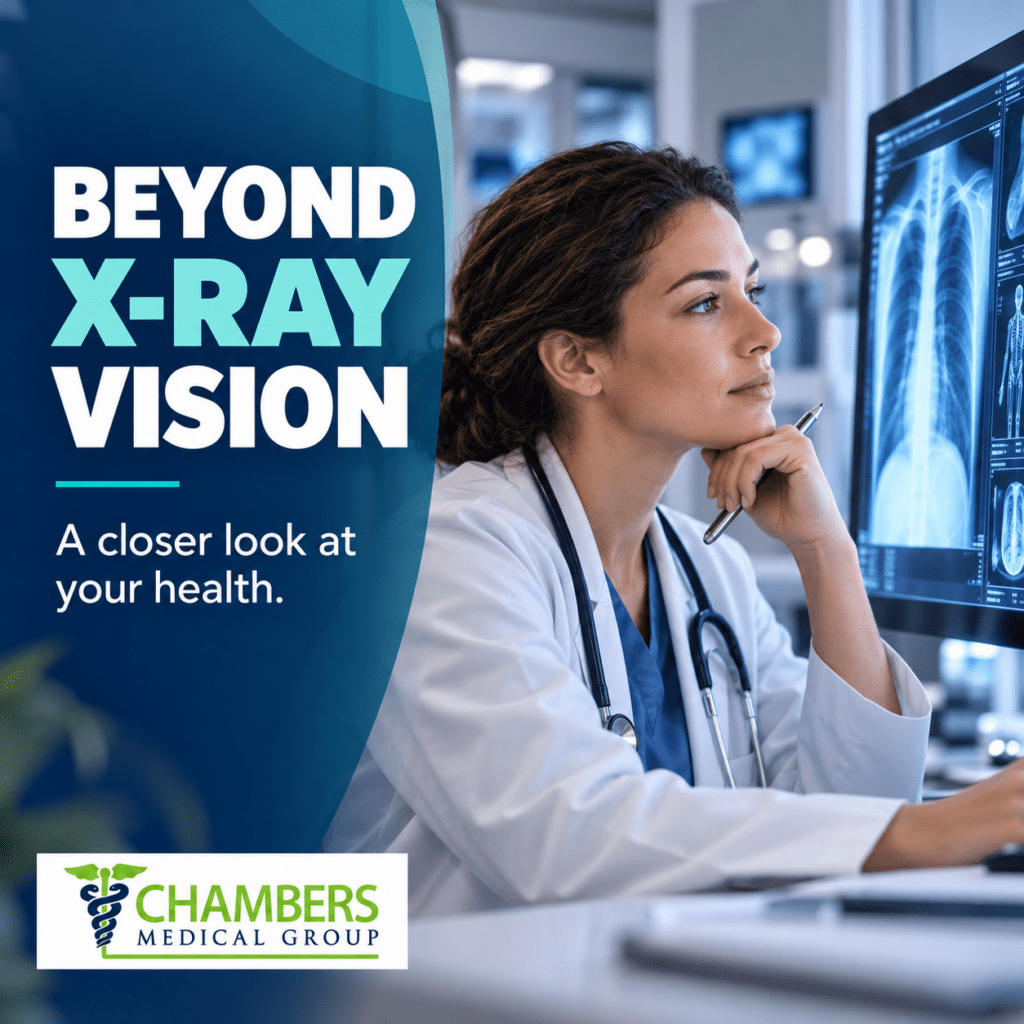
MRI – Beyond X ray vision
I am sure most people have at least heard of MRI, a very useful tool for modern medicine. It stands for Magnetic Resonance Imaging, but what does it do? Well, let us delve into it some history first. Dr. Clayton Bowman of Chambers Medical Group, one of the highest rated car accident medical doctor care programs in Kentucky, discusses Magnetic Resonance Imaging.
The first MRI became commercially available in the early 1980’s, but its essence was first discovered in the 1940’s via nuclear resonance imaging (NMR), developed by Edward Purcell and Felix Bloch who discovered that when placed in a magnetic field, some nuclei emit certain radiofrequencies. In the 70’s, Dr. Raymond Damadian thought to try to use NMR on humans to detect cancer, which proved very useful, and Dr. Paul Lauterberg brought about the idea of magnetic field gradients. Then in the early 80’s, the technology evolved into a more widespread use1.
So, all the scientific speak aside, how does it work? Well, the human body is rife with water (made up of around 60%-70%). The powerful magnet lines up these water molecules in the same direction (like a compass pointing north) by pulling on the hydrogen atoms. Then a pulse of radio waves pushes them out of alignment for a moment, and then they re-align when the pulse is over. The signals are received by a sensor which then sends to a computer and converts them to an image2. Due to the various amounts of water in different tissue types (bone, muscle, fat, etc.), the signals are different, thus making very clear images of the different tissues. And unlike X-rays and CTs (Computed Tomography), there is no ionizing radiation exposure.
The applicability of the images cannot be understated. It is used by virtually all specialties of medicine, especially cancer related fields and research. It can also be used in light of trauma. Due to it is measuring of the water, it provides much better fidelity of the soft tissues. Therefore, tears of tendons or ligaments, as well as assaying the spinal cord and its branches, appear in much more detail than with CT scanning.
There are some drawbacks, however. Due to the strong magnetic field, ferrous metals are of significant concern. Anything that reacts to magnetic fields could be a danger, such as certain jewelry and clothing items. This also applies to medical appliances like pacemakers, spinal stimulators, certain surgical clips, etc. There are certain advances in “MR Compatible” hardware where it is still possible to get an MRI with these devices, but under strict guidelines. Not to worry though, MRI technicians thoroughly screen patients before entering to ensure safe testing. They can also be a bit pricey and due to the process outlined above, can take a bit longer than CT scanning. Another aspect is that of claustrophobia. If you have never had one, an MRI machine can be a very tight place, being fully enclosed in a tube. There are medicines which may help to overcome this. Another concern is body habitus. Some patients of broader stature may have trouble fitting inside the machine, though there are the possibility of open MRIs and “large bore” MRIs which will most likely suffice.
In any case, if you have an ongoing issue, getting an MRI may be a helpful tool to diagnose an ongoing malady, especially in cases of motor vehicle accidents. Talk to your physician to see if you may need one. Extreme forces of an automobile accident can lead to serious injury that lies within and is difficult to see. Get checked out and get whole again.
- Lieber, Katherine. The History of the MRI: The Development of Medical Resonance Imaging. Midwestern Career College. https://mccollege.edu/aas-in-magnetic-resonance-imaging-mri-technology/about-the-mri-technology-career/the-history-of-the-mri-development-of-medical-resonance-imaging/
- https://www.hopkinsmedicine.org/health/treatment-tests-and-therapies/magnetic-resonance-imaging-mri
— This article is written by Clayton Bowman, D.O., one of the members of Chambers Medical Group’s team of car accident medical doctors. Chambers Medical Group is a full-service medical group with a complete team of car accident medical doctors and chiropractors who offer a variety of treatments and therapies ranging from diagnostic testing to various soft tissue therapies for car accidents and injuries in Kentucky.
Contact Chambers Medical Group to schedule an evaluation or find the location nearest you.
Car Accident Injury Care Lakeland Florida
Car Accident Injury Care Sarasota Florida
Car Accident Injury Care Brandon Florida