Pain in the Neck, and Then Some
September 21, 2026
MRI – Beyond X Ray Vision
September 21, 2026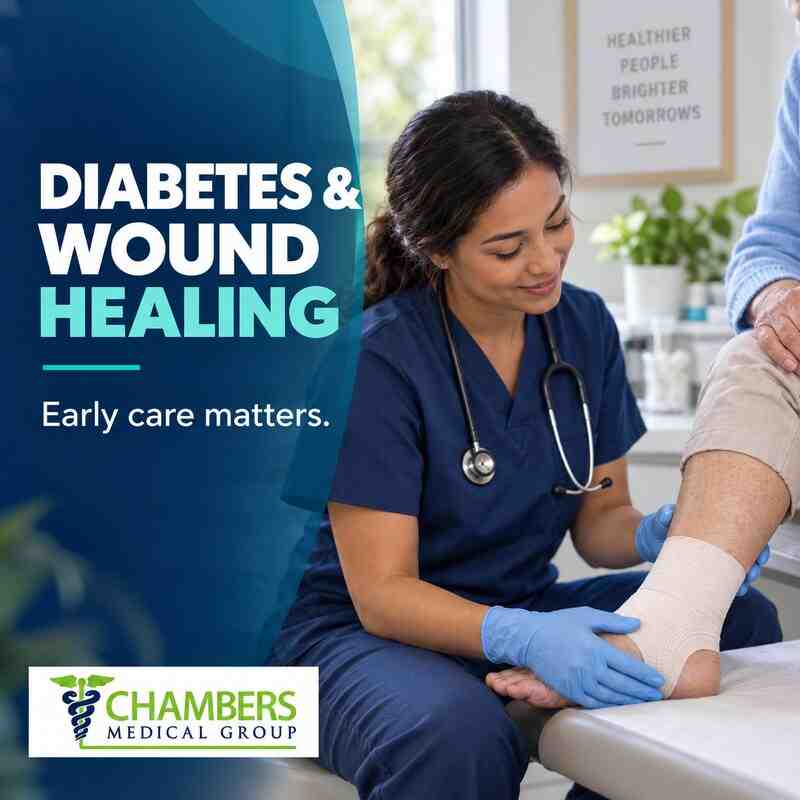
Too Sweet by Half – Problems with Diabetes in Wound Healing
Diabetes mellitus (elevated blood sugar) affects up to 40 million Americans, or around 12% of the population1. Automobile accidents are undoubtedly going to affect this population. Along with the damage to the vehicle may come a host of damages to the body, including wounds. There comes some concern with healing in the face of diabetes. Dr. Clayton Bowman of Chambers Medical Group, one of the highest rated car accident medical doctor care programs in Kentucky, discusses the problems with diabetes in wound healing.
Normally, wound healing goes through phases: inflammation, proliferation, and remodeling, a process which is not as simple as it sounds. The Inflammatory phase is an intricate dance of cytokines, mediators, and cells. Simply put, inflammatory cells function to stop bleeding through clotting and repairing blood vessels (angiogenesis), while other cells lay down a foundation of collagen structures to make a “scaffold.” In proliferation, connective tissue (collagen) multiplies to the injured area with the help of the scaffold and new blood vessels are made (neovascularization). Finally, remodeling strengthens the wound, and it matures until healed in its fullest2, resulting in scar formation.
Diabetes throws a wrench in the whole works. It interferes with almost all of these healing processes. Often, it results in too much inflammation and not enough angiogenesis along with reducing collagen production which in turn delays the maturation of the tissue3. Therefore, the tissue is more susceptible to stresses and not as strong. It can also make you more susceptible to wound infections due in part to weakened immune system. Think of it in terms of hiring a contractor to build your house, but at the site, there are missing building materials, and half the crew does not show up to work. The house may get built, but it will take longer and the workmanship will be poor.
There are a few simple ways to mitigate these impacts on the healing process in the face of diabetes. First and foremost is good blood sugar control. Also, good nutrition with a diet rich in vitamins and lean protein is a good way to replace some of the missing “building materials” from your house. Also doing light exercise and activity helps to reduce inflammation and improves insulin use by the body. There are other advanced ways to help as well, including hyperbaric oxygen, platelet rich plasma, stem cell therapies3, and so on, but this is outside the scope of this article. The important thing is, if you have diabetes and have a wound, seek out appropriate medical care, and get the proper treatment.
- https://diabetes.org/about-diabetes/statistics/about-diabetes
- Wallace, Harris et al. NIH NCBI Stat Pearls. Wound Healing Phases. 2023. https://www.ncbi.nlm.nih.gov/books/NBK470443/
- Dasari Nina, et al. Seminars in Plastic Surgery. Updates in Diabetic Wound Healing, Inflammation, and Scarring. 2021 Jul 15;35(3):153–158. doi: 10.1055/s-0041-1731460
— This article is written by Clayton Bowman, D.O., one of the members of Chambers Medical Group’s team of car accident medical doctors. Chambers Medical Group is a full-service medical group with a complete team of car accident medical doctors and chiropractors who offer a variety of treatments and therapies ranging from diagnostic testing to various soft tissue therapies for car accidents and injuries in Kentucky.
Contact Chambers Medical Group to schedule an evaluation or find the location nearest you.
Car Accident Injury Care Lakeland Florida
Car Accident Injury Care Sarasota Florida
Car Accident Injury Care Brandon Florida