Best Exercises for Neck and Back Pain After a Car Accident
December 30, 2025
Safely Remove Ice from Windshields
December 30, 2025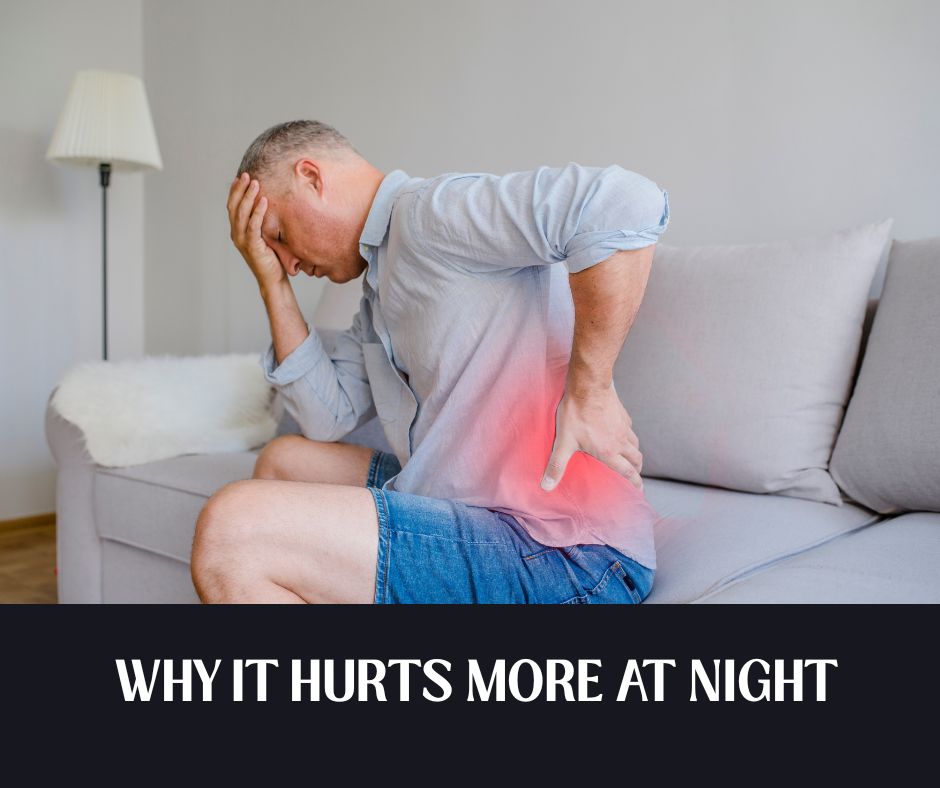
Why It Hurts More at Night
Many patients believe their discomfort after a motor vehicle accident (MVA) will be mild and short-lived. They hope to wake up the next day feeling normal. Instead, pain often intensifies when the lights go out. This common pattern frustrates patients and disrupts sleep. Understanding why nighttime pain worsens helps patients see it as a normal part of recovery and encourages them to seek the right care. At Chambers Medical Group, one of the highest rated car accident medical doctor care facilities in Kentucky, we frequently explain this to patients struggling with worse symptoms at night.
Dr. Aaron Workman of Chambers Medical Group goes over some of the reasons pain often spikes after dark following an MVA.
- Inflammation Overnight
The body’s natural repair cycle increases inflammation during rest to heal tissues. The swelling around injured muscles can take a few days to develop. When you stop moving and lay down at night your circulation also slows. Swelling can build in the irritated areas making them stiffer and more sensitive. This gives rise to that deep, throbbing ache you get while trying to rest, making the daytime ache into a nightmare later.
- Adrenaline Fades
Immediately after a car accident, your body goes into survival mode, releasing a rush of adrenaline and endorphins. These act like a natural defense that numbs pain and hides the true extent of injuries such as muscle tears or whiplash. As your body returns to its normal state, the pain that was masked all day finally surfaces. Everything feels sharper when you finally relax.
- Gravity No Longer Helps
Standing and moving during the day lets gravity pull excess fluid away from injured areas. With every movement your body acts like a pump moving fluids all throughout your body. Lying flat at night allows swelling to pool in the neck or lower back, increasing pressure and soreness that often peaks when you wake up. When your feet hit the floor, you may feel like going right back to bed.
- Muscles Tighten
Injured muscles stay warmer and looser with daytime movement. At night, they cool and shorten, pulling on sore joints and irritated nerves. This stiffness makes finding a comfortable position difficult and can make the discomfort feel worse.
- Cortisol Levels Drop
Cortisol, the body’s built-in anti-inflammatory and pain controller, is highest in the morning and lowest around midnight. When cortisol levels are at their lowest overnight, the body has less natural anti-inflammatory relief. This allows inflammation from MVA injuries to become a noticeable problem. This reduction in the body’s pain control, combined with an increase in inflammatory signals during sleep, makes every tender spot feel much worse during the darkness.
Worsening pain at night is often your body’s way of signaling that it is working to heal, rather than a sign that your injury is getting worse. While this is a normal part of recovery, persistent or severe pain should not be ignored. At Chambers Medical Group, we guide patients through this phase of healing and try to manage symptoms and promote a better sleep. Taking the patient through all the typical symptoms they will feel helps assure them the situation is temporary and that these flare-ups are expected. If you have found yourself unable to rest throughout the night, an evaluation is the first step to a good night’s sleep.
— This article is written by Aaron Workman, DC, one of the members of Chambers Medical Group’s team of car accident chiropractors who offer a variety of treatments and therapies ranging from diagnostic testing to various soft tissue therapies for car accidents and injuries in Kentucky.